
People are sure finding interesting ways to mark America’s Semiquincentennial (Yes, I had to look that up)!
From the ubiquitous mattress “sales” to $25 hot pretzels at the Great American State Fair, it is a bandwagon that many apparently have been waiting 249 years to jump on.
Fortunately, there are still places to find more authentic means of marking the anniversary of our declaring independence from at least one tyrant, and some of them are right here in our backyard!
In an observation that has been organized by the Berkshire County Historical Society, Berkshire Cider Projectand Hot Plate Brewing are releasing a set of beverages (natch!) inspired by the authentic flavors of our Colonial forefathers.
The Cider Project’s Constitution Hill is a small-batch hard cider that is made using wild apples foraged along the trails of its eponymous rise in Lanesborough (where, it is said, Jonathan Smith lit a bonfire in 1788 to celebrate Massachusetts’ ratification of the Constitution) and following traditional colonial methods, including barrel-fermenting with wild yeast and six months of bottle-conditioning. The result is a dry, sparkling cider with earthy tannins that would have been familiar in colonial home and taverns throughout New England.
Though the Project has shared other projects with the Society, Head Cidermaker Matt Brogan says this one was extra special.
“We’ve been working with the Berkshire County Historical Society for a few years, sourcing wild apples from the property at Arrowhead and planting a small orchard with heirloom varieties that would have been common in Herman Melville’s time,” he explains. “What excited us most was the chance to use cider as a storytelling tool.”
As the orchard existed in the Colonial era, Brogan suggests that the cider is, “a reminder that our revolutionary local history isn’t something distant – it’s a living part of the landscapes, ideals and traditions we still enjoy today.”
Though they already make ciders that recall and celebrate other local landmarks like
Hancock Shaker Village, Berkshire Cider enjoys exploring the region’s history to find new recipes and inspirations.
“We think cider and beer is a fun way to engage the history and stories behind these unique locations in the Berkshires,” Brogan says.
A limited run of 250 individually numbered bottles of will be available beginning July 5 at Berkshire Cider Project’s tasting room at Greylock WORKS in North Adams.
When asked how the project took shape, Historical Society Executive Director Lesley Herzberg explains, “I reached out…last year and suggested that this might be a fun way to celebrate the 250th.”
As Herzberg realized that the 250th may not excite everyone (especially at a time when the democracy or forefathers and mothers fought for is arguably at risk), approaching the celebration through delicious beverages seemed to be a clever way of expanding the audience.
“This is a great way to engage a different group of folks that might not be as interested in the history of the Revolution, but might want to try a new type of beer or cider,” Herzberg reasons, suggesting that, “history is most engaging when people can experience it with all their senses.”
As one of the Society’s jewels is Herman Melville’s home, Arrowhead, Herzberg also notes that the Project is crafting a Melville-ian cider that should be out soon as well.
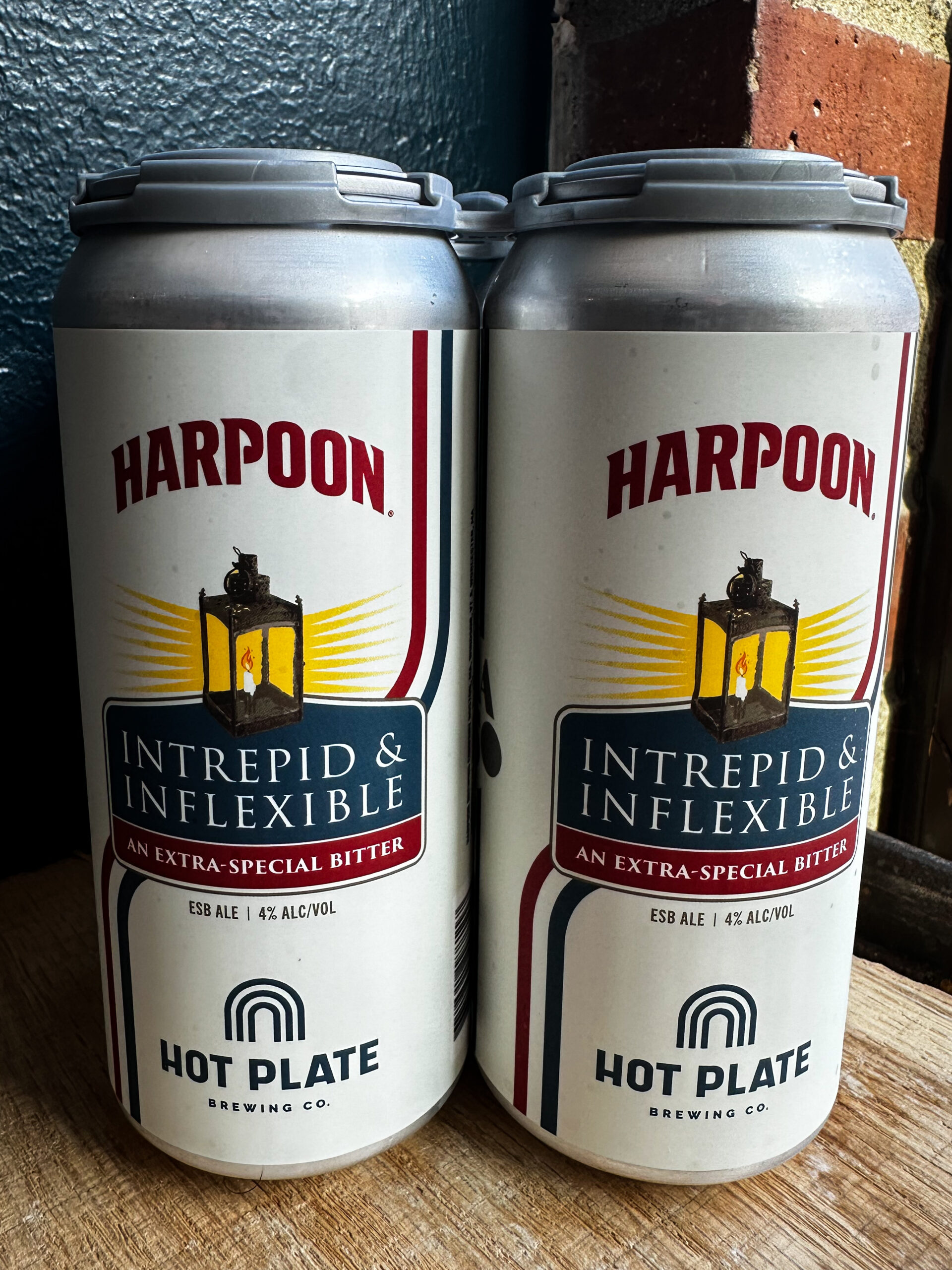
As for Hot Plate, their new Intrepid & Inflexible ESB, was also collaboratively crafted with Boston’s historic Harpoon Brewery.
“We always knew we wanted to do something special for the 250th Celebration,” says Harpoon’s VP of Marketing Rob Day. “When we first met to collaborate with our friends at Hot Plate, this idea floated to the top and felt like a lightbulb moment. Two breweries spanning this revolutionary state making a colonial beer with a modern lens was a perfect tribute!”
“We collaborated with Harpoon for Mass Beer Week,” explains Hot Plate’s Mike Dell’Aquila, “and because the beer we made was so well received by customers and our brewers, we decided to produce another batch and make it our official MA250 beer!”
Intrepid & Inflexibleis a traditional English-style Extra Special Bitter inspired by Colonial-era ales that takes its name from John Adams’ description of the “bold” patriots who participated in the Boston Tea Party.
“Great beer tells a story,” Dell’Aquila suggests. “By brewing a traditional ESB, we’re celebrating both the history of beer and the bold spirit of the Revolution. It’s a beer with character – balanced, expressive, and a little rebellious – and we think it’s a fitting way to raise a glass to 250 years of American history.”
Though it is an IPA, Dell’Aquila is keen to maintain that I&I differs from many other contemporary interpretations of this popular style.
“As we come out of a 10+ year stretch where the New England IPA has been a dominant style of beer,” he says, “we’d like to show that there is also more to beer than just an overloading of hops. Because this is an English style, it’s not hop-forward at all, it is malty and finishes clean, and has a much more palatable ABV, which means you can have a few!”
Especially as water was not always safe to drink in the early days of our nation, Dell’Aquila notes that low-alcohol beers were often created so that even children could hydrate without contracting diseases.
“While we have modern equipment and much better quality control,” he assures, “the ingredients, style, and ABV levels are all mimicking the English ales being produced at that time.”
As he has a “personal interest in literature and history,” Herzberg cites Dell’Aquila as, “a willing collaborator” who has collaborated with the Society many times before, including by hosting readings and even the most recent Marquis de Lafayette.
“The Revolution wasn’t only fought in famous meeting halls and battlefields,” Herzberg observes. “It was also lived in farms, orchards, taverns, and communities across the Berkshires. By partnering with local producers, we’re able to share those stories in a fresh and accessible way that invites people to experience history rather than simply read about it.”